Paper jams and feeding
Printer paper jam but no paper? How to find the cause
Written by Fix a Printer Editorial Team · Updated
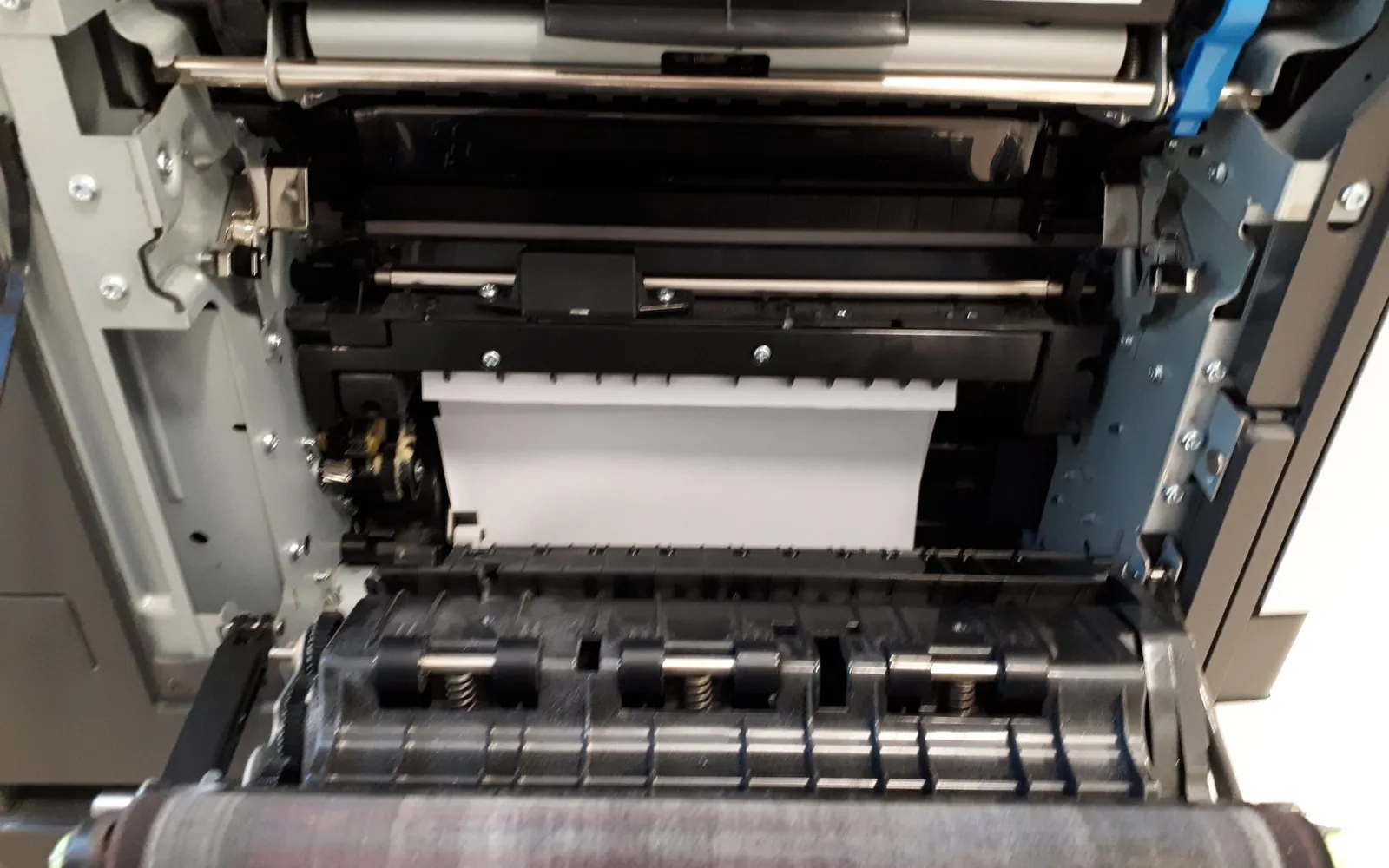
A printer paper jam with no paper in sight is one of the most annoying errors because there is nothing obvious to pull out. The printer is not lying, though. It reports a jam when a sensor expects paper and does not see it on time, or when a moving part cannot travel where it should. Something is still in the way, or a sensor is giving a wrong reading. The checks below find the cause in most cases, starting with the most likely ones.
If you can see the jammed sheet, follow our basic guide on how to clear a paper jam instead. If the printer does not take paper at all, see printer not picking up paper.
Read the message first
Before opening anything, look closely at what the printer says. Many printers name the area of the jam (“rear”, “tray 2”, “duplex”, “output”) or show a numbered code, and the display may include an animation of where to look. That saves you from checking every door. Write down any code exactly; jam codes are specific to each manufacturer and often to each model, so the manual or the manufacturer’s support pages for your model tell you what each one means. If the computer shows only a generic “Error” under the printer’s name, see printer in error state for how to find the real message.
Before you start
Turn the printer off and unplug it. Inkjet carriages can move suddenly and laser printers have a fuser that gets hot enough to burn; give a laser printer ten minutes to cool. Have a torch (a phone light is fine) and a lint-free cloth ready. Do not use metal tools like knives or tweezers inside the printer; they scratch rollers and can damage sensor flags.
1. Look for a torn scrap
The most common cause is a small corner torn off an earlier jam. It can be hiding where you cannot see it from the front.
- Remove all paper from the input tray and look into the slot with the torch.
- Open the rear access door or remove the duplex unit if your printer has one. Many jams happen at the back where the paper turns.
- On laser printers, remove the toner or drum cartridge and look at the paper path underneath.
- Pull any scrap out slowly in the direction the paper normally travels, using both hands, so it does not tear again.
2. Check for foreign objects
Paper clips, staples, sticky labels that peeled off inside, and even pen caps end up in printers. Tilt a small printer gently, with the trays out, to see if anything slides out. Labels are a particular problem: a label stuck to a roller makes the printer think paper is stuck there permanently.
3. Make sure the carriage moves freely (inkjets)
On inkjet printers, a “paper jam” message is sometimes really a carriage jam. If the print head cannot travel from one side to the other, many printers report it as a jam.
- With the printer unplugged, open the cartridge access door.
- Gently push the carriage left and right by hand. It should slide smoothly.
- Look along the rail and under the carriage for paper, packing tape or foam left from setup.
- Check that cartridges are fully seated and that nothing sticks up and catches on the frame.
4. Check the sensors
Printers detect paper with small plastic flags or optical sensors along the paper path. If a flag is stuck in the “paper present” position, or an optical sensor is covered in paper dust, the printer believes a sheet is still there.
- Look for small plastic levers in the paper path. With the printer off, they should move freely and spring back.
- Blow loose dust away with a few short puffs of air. Do not spray liquids into the printer.
5. Clean the rollers
Dusty or glazed rollers slip, so paper arrives late at the next sensor and the printer calls it a jam. Wipe the rubber rollers with a lint-free cloth lightly dampened with water, turning each one with your finger to clean the whole surface. Let them dry before printing.
6. Use the right paper
- Load a fresh stack of plain paper, fanned and squared, below the tray’s maximum line.
- Slide the paper guides so they touch the stack without bending it.
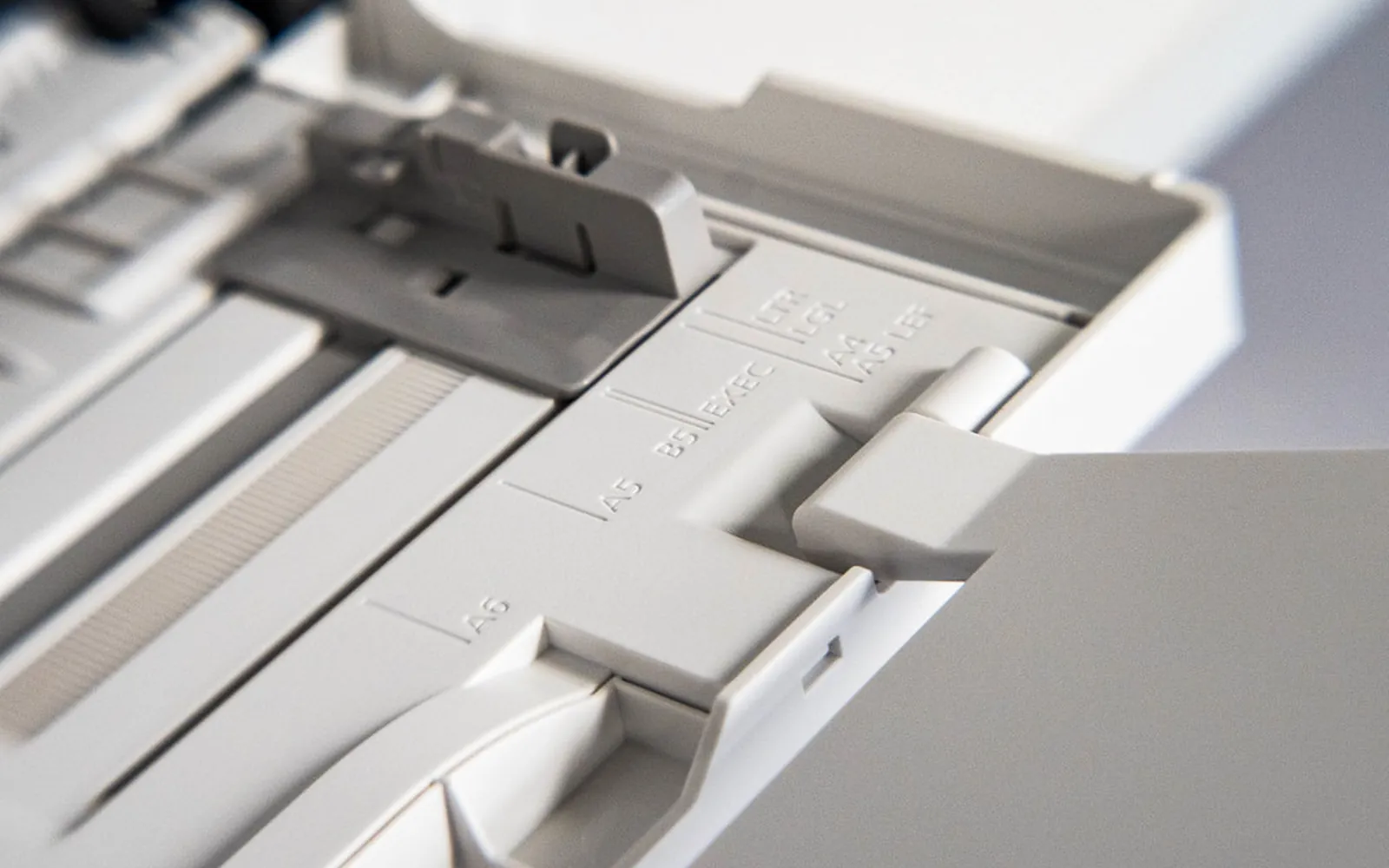
- Make sure the paper size and type set in the print dialog match what is in the tray. A printer expecting A4 that gets Letter, or the other way round, can report a jam when the sheet ends early or late.
7. Do a full power reset
Close every door firmly; a door that is not fully closed can trigger jam or cover messages. Plug the printer straight into a wall socket (not a power strip), turn it on and let it finish its start-up. Many printers test the paper path and sensors during start-up and clear the error if nothing is blocking. Print a single test page.
8. Update the firmware
On some models, false jam messages were fixed by firmware updates. Check the printer’s settings menu or the manufacturer’s support site for your model for a firmware update, and install it only from the manufacturer.
If the jam clears but print quality suffers
After a long hunt for scraps, the first prints sometimes come out marked. On inkjets, ink can transfer to rollers that were touched or that held a damp sheet, leaving smears or ink on the back of the page; see printer smudging ink. On laser printers, loose toner from a sheet that never reached the fuser can print as stray marks for a few pages before it clears. Print a few plain pages; if the marks stay, go to our guide to printer printing lines and streaks.
When it is a hardware fault
If the error comes back immediately after start-up with the paper path completely clear, a part has probably failed: a broken sensor flag, a worn pick-up roller, a stripped gear or an encoder strip on an inkjet that is dirty or damaged. Signs of a mechanical fault include grinding noises, the carriage stopping in the same place every time, or the error appearing before any paper moves.
At that point you have three options: a repair service for your model, a replacement part if the manufacturer sells one, or replacing the printer. For cheap inkjets, repair often costs more than a new printer, so get a quote before you commit.
For other problems, browse the printer troubleshooting guide, which groups every fix on this site by symptom.
Frequently asked questions
Why does my printer say paper jam when there is no paper?
The printer decides there is a jam when a sensor does not see paper arrive or leave on time, or when the print carriage is blocked. A scrap of paper, a label, a paper clip, a dirty sensor flag or a stalled carriage can all trigger it.
Can a false paper jam be caused by the wrong paper?
Yes. Very thin, curled, damp or glossy paper can slip on the rollers and arrive late at the sensor. Try fresh plain paper that matches the size set in the driver.
How do I reset a paper jam error?
Clear the paper path, close every door firmly, then turn the printer off, unplug it for about a minute and turn it back on. Many printers re-check the sensors at start-up and clear the message if nothing is blocking.
Is it worth repairing a printer with a permanent false jam?
It depends on the printer. For a low-cost inkjet a broken sensor or gear often costs more to repair than the printer is worth. For an office laser printer, replacing a sensor or roller kit is usually worthwhile.
Sources
Editorial team
The Fix a Printer team writes and updates independent printer troubleshooting guides, checking Windows and macOS steps against Microsoft and Apple documentation.