Paper jams and feeding
Printer wrinkling or creasing paper: causes and fixes
Written by Fix a Printer Editorial Team · Updated
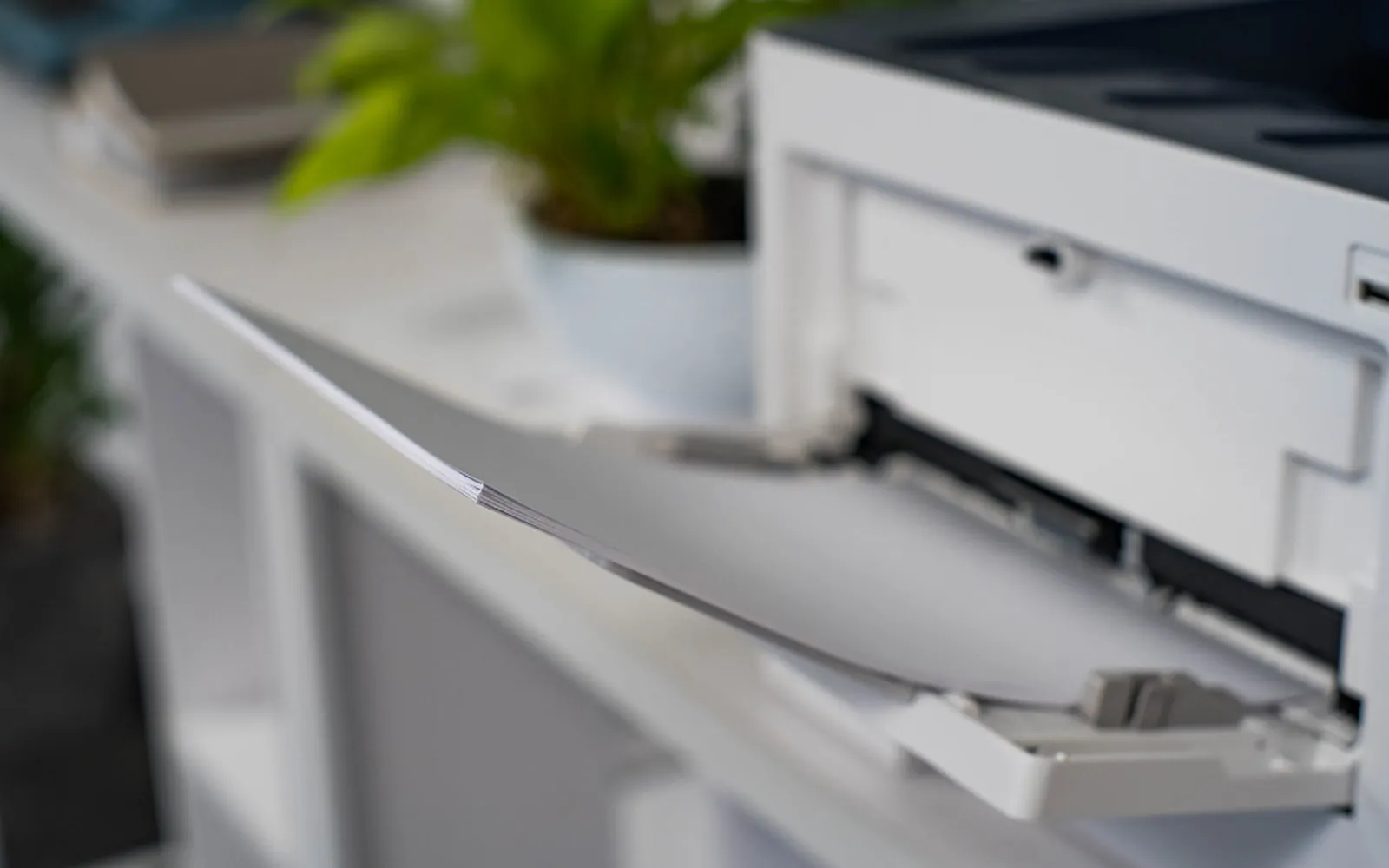
A printer wrinkling paper spoils documents and often leads to jams. The good news is that most creases come from the paper or the way it is loaded, not from a broken printer. Wrinkles appear when one part of the sheet moves faster than another, when the sheet is pinched, or when moisture and heat change its shape. This guide covers the causes from most to least common.
If the sheets come out twisted on the page rather than creased, see printer printing skewed. If a wrinkled sheet got stuck, how to clear a paper jam shows how to remove it without tearing it.
Step 1: Try fresh, dry paper
Paper takes up moisture from the air. Damp paper becomes wavy and limp, feeds unevenly, and creases. In a laser printer the fuser’s heat drives moisture out of the sheet in a fraction of a second, which adds curl and puckering.
- Open a fresh ream that has been stored flat, sealed in its wrapper.
- Do not leave paper sitting in the tray for weeks in a damp room or near a window.
- Store reams flat, not on their edge, and away from radiators, kettles and outside walls.
If fresh paper solves it, the old stock was the problem. Keep the rest wrapped until you need it.
Step 2: Match the paper type setting
Printers adjust speed, ink amount or fuser heat to the paper type you choose. Thin paper on a heavy setting, or heavy paper on a plain setting, can wrinkle or curl.
- In the print dialog, open Printer properties, Preferences or the paper options.
- Set Paper type or Media type to the paper you loaded: plain, thin, thick, recycled, labels, envelope, photo and so on.
- Check that the tray’s paper settings on the printer match too.
Also check the paper is within what the printer supports. The user guide lists supported weights; paper that is much thinner or thicker than that range wrinkles more.
Step 3: Reload the tray
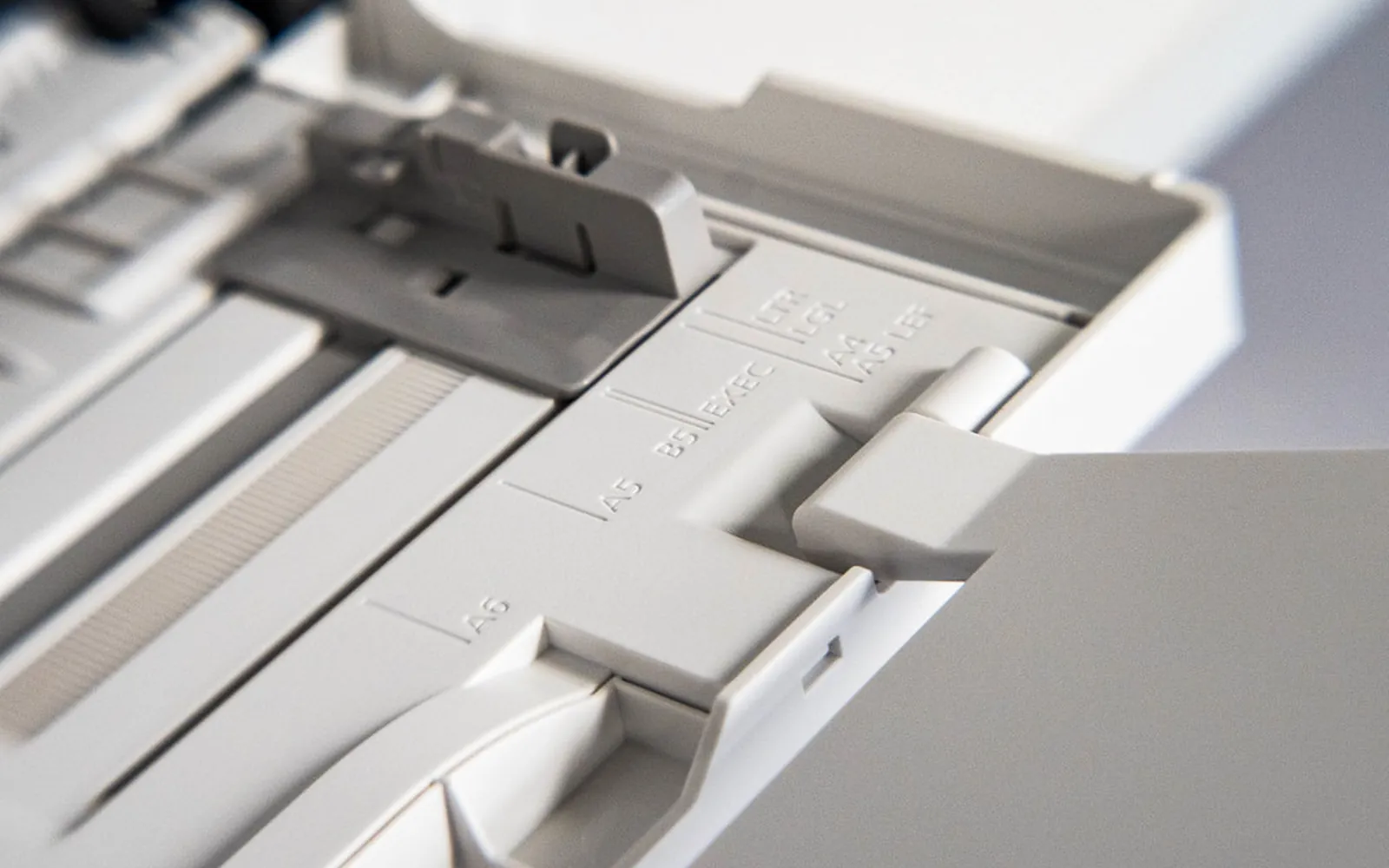
- Guides too tight: side guides that squeeze the stack make the paper bow, and the bow becomes a crease. Set them so they just touch the paper.
- Overfilled tray: paper above the fill mark is pressed hard against the pickup roller and can fold as it feeds.
- Mixed paper: different paper types in one tray slide differently. Use one type per tray.
- Curled sheets: fan the stack and, if it curls, turn it over or replace it.
If the printer also grabs several sheets at once, see printer pulling multiple sheets.
Step 4: Clean or replace the rollers
Rollers that grip unevenly pull one side of the sheet faster than the other, which twists and creases it.
- Switch off and unplug the printer.
- Remove the tray and find the pickup roller and any feed rollers you can reach.
- Wipe them with a lint-free cloth lightly dampened with water, turning each roller to reach its full surface.
- Let them dry before switching the printer back on.
Glazed, cracked or hard rollers should be replaced. Printer not picking up paper explains the signs of roller wear.
Step 5: Envelopes and special media
Envelopes are the most common thing to wrinkle, especially in laser printers. An envelope is several layers of paper with air trapped between them, and the fuser presses and heats them together.
- Use envelopes intended for laser printers if you have a laser printer.
- Set the paper type to Envelope and the correct envelope size.
- Feed envelopes the way the user guide shows, usually through the rear tray, manual feed or a specific tray.
- Some laser printers have an envelope lever at the rear or inside the rear door, which reduces fuser pressure. Set it for envelopes and back to normal afterwards. Check your user guide to see whether your model has one.
- If the printer has a straight paper path (rear output door), open it for envelopes and thick media so they do not bend around the rollers.
Step 6: Look for obstructions
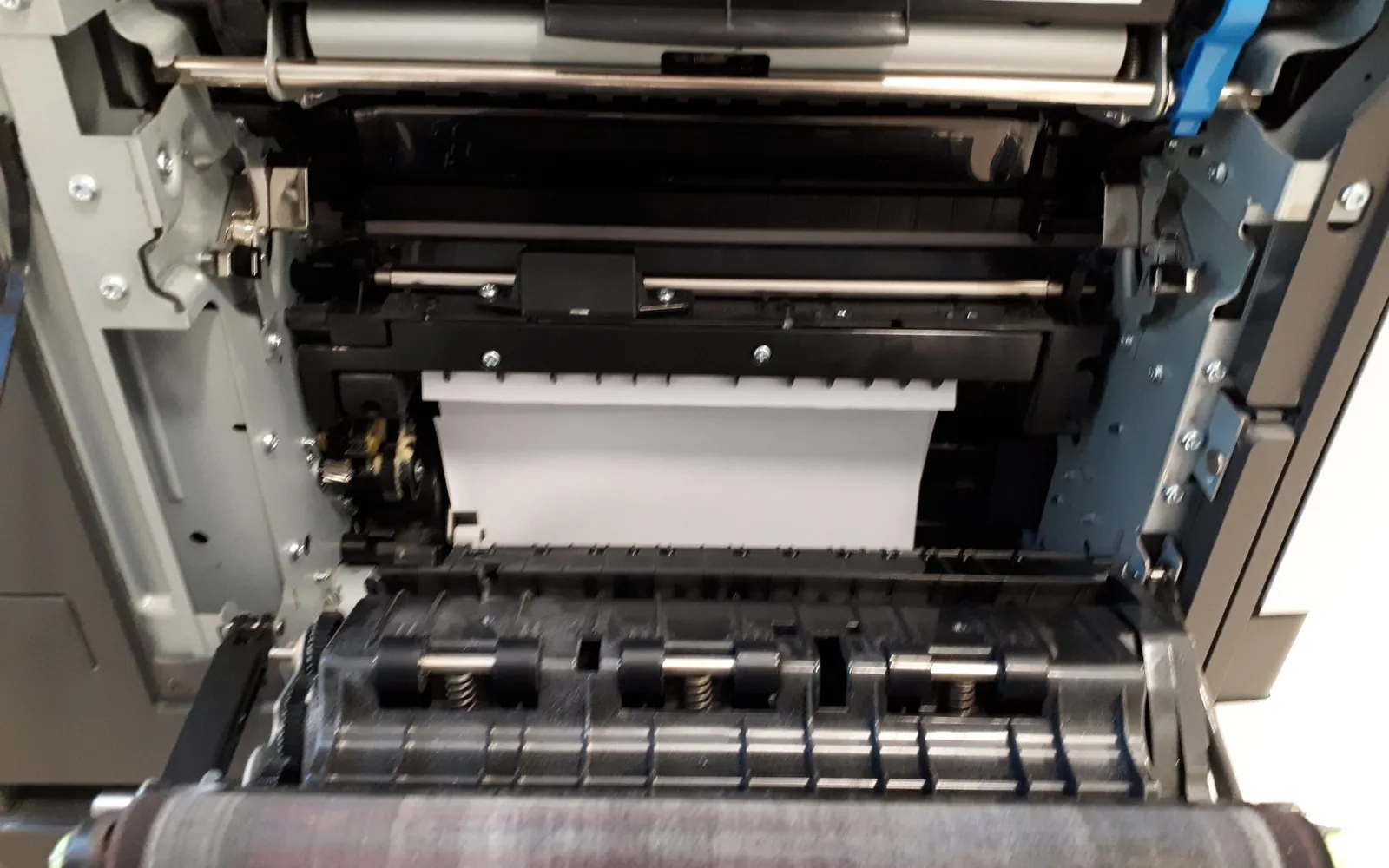
A scrap of paper or a label stuck in the paper path can catch the sheet and fold one corner. With the printer off, open the access doors and look along the path with a torch. Remove what you can reach by hand.
Step 7: Consider the fuser on laser printers
If a laser printer creases every sheet in the same place, even with fresh paper set correctly, the fuser may be worn. The fuser’s pressure roller and heated roller or film must press the sheet evenly; when they wear, wrinkles, creases or a wavy edge appear. Other fuser signs include toner that rubs off, described in printer smudging ink.
The fuser gets very hot and may carry mains voltage. Let the printer cool before opening the rear area, and leave replacement to your model’s service procedure or a technician.
Inkjet note: wavy pages after printing
On inkjet printers, pages with a lot of ink, such as photos or solid color areas on plain paper, can come out wavy because the paper absorbs the wet ink. That is called cockling. It is not a fault. Use the paper type intended for heavy ink coverage, such as photo or matte paper, and set it in the print dialog.
Quick checklist
- Fresh, dry paper from a sealed ream.
- Paper type setting matches the paper.
- Guides touching but not squeezing, tray not overfilled.
- Clean rollers, nothing in the paper path.
- Envelope setting and envelope lever for envelopes.
- Worn fuser checked on a laser that creases every sheet.
Frequently asked questions
Why is my printer wrinkling the paper?
Common causes are paper that has absorbed moisture, the wrong paper type setting, paper guides that are too tight, an overfilled tray, mixed or curled paper, and worn or dirty rollers. In laser printers, envelopes and thin paper wrinkle in the fuser, and a worn fuser can crease every sheet.
Can humidity cause printer paper to wrinkle?
Yes. Paper absorbs moisture from the air, which makes it wavy and limp. Wavy paper feeds unevenly and creases, and in laser printers the fuser's heat drives the moisture out quickly, which adds curl and wrinkles. Keep paper sealed in its wrapper and stored flat.
Why do envelopes wrinkle in my laser printer?
An envelope is several layers of paper with air between them, and the fuser presses and heats it. Use envelopes made for laser printers, set the paper type to envelope, feed them the way the user guide shows, and use the envelope lever on the fuser or rear door if your model has one.
Is a wrinkling fuser dangerous to fix myself?
The fuser gets very hot and some fusers carry mains voltage. Let the printer cool fully before opening the rear area, and leave fuser replacement to the procedure in your model's service information or to a technician.
Sources
Editorial team
The Fix a Printer team writes and updates independent printer troubleshooting guides, checking Windows and macOS steps against Microsoft and Apple documentation.