Print quality
Printer smudging ink: why prints smear and how to stop it
Written by Fix a Printer Editorial Team · Updated
A printer smudging ink across your pages can come from wet ink, a dirty part of the paper path, paper that touches the print head or, on laser printers, toner that never bonded to the sheet. The fix depends on which one you have, and most of them cost nothing. This guide helps you read the smudge, then works through the cheapest fixes before any part is replaced.
For clean lines or banding without smearing, see printer printing lines or streaks. For other symptoms, go to the printer troubleshooting guide.
Read the smudge before you fix it
Print one page of text and one page with a large dark area, then look closely at both sides.
- Wet smears on the front that spread when you touch them: too much ink for the paper, the wrong paper side, or ink that needs more time to dry.
- Marks on the back or along the edges: ink has collected on the platen (the flat area under the print head) or on the rollers.
- Short streaks or scuffs in the direction the head moves: the paper is touching the print head, usually because it is curled, damp or thick.
- Smudges that repeat at the same distance down every page: a dirty roller leaving a mark on each turn. On a laser printer, see laser printer ghosting if the repeat is a faint copy of the image.
- Toner that wipes off with a finger (laser only): the toner is not being fused.
Also note whether every page is affected or only certain documents. If the problem appears only with photos or full-page graphics, the settings and paper are the likely cause, not the printer.
Cheapest fixes first
1. Match the paper type setting
This is the most common cause and the easiest to fix. The paper type tells the printer how much ink to lay down and, on lasers, how much heat to use. Printing on plain paper with a glossy or photo setting floods the page with ink that cannot soak in.
- Windows 11: open Settings > Bluetooth & devices > Printers & scanners, select the printer and choose Printing preferences. Set the paper type to match what is loaded and use standard quality rather than the highest setting.
- macOS: in the print dialog, open the printer-specific section for media and quality and choose the matching paper type. Settings saved as presets can bring the wrong type back, so check the preset too.
Many printers also have a paper setting on their own control panel for each tray. If it does not match the computer setting, some models print with the wrong amount of ink or show a mismatch message.
2. Check the paper itself
- Use paper from a freshly opened pack. Paper that has absorbed moisture curls and takes ink unevenly.
- Load photo paper with the coated side the way your printer expects. The packaging and the paper tray label usually show which way round.
- Fan the stack and make sure it sits flat under the guides. If sheets are being pulled in crooked or two at a time, read printer not picking up paper.
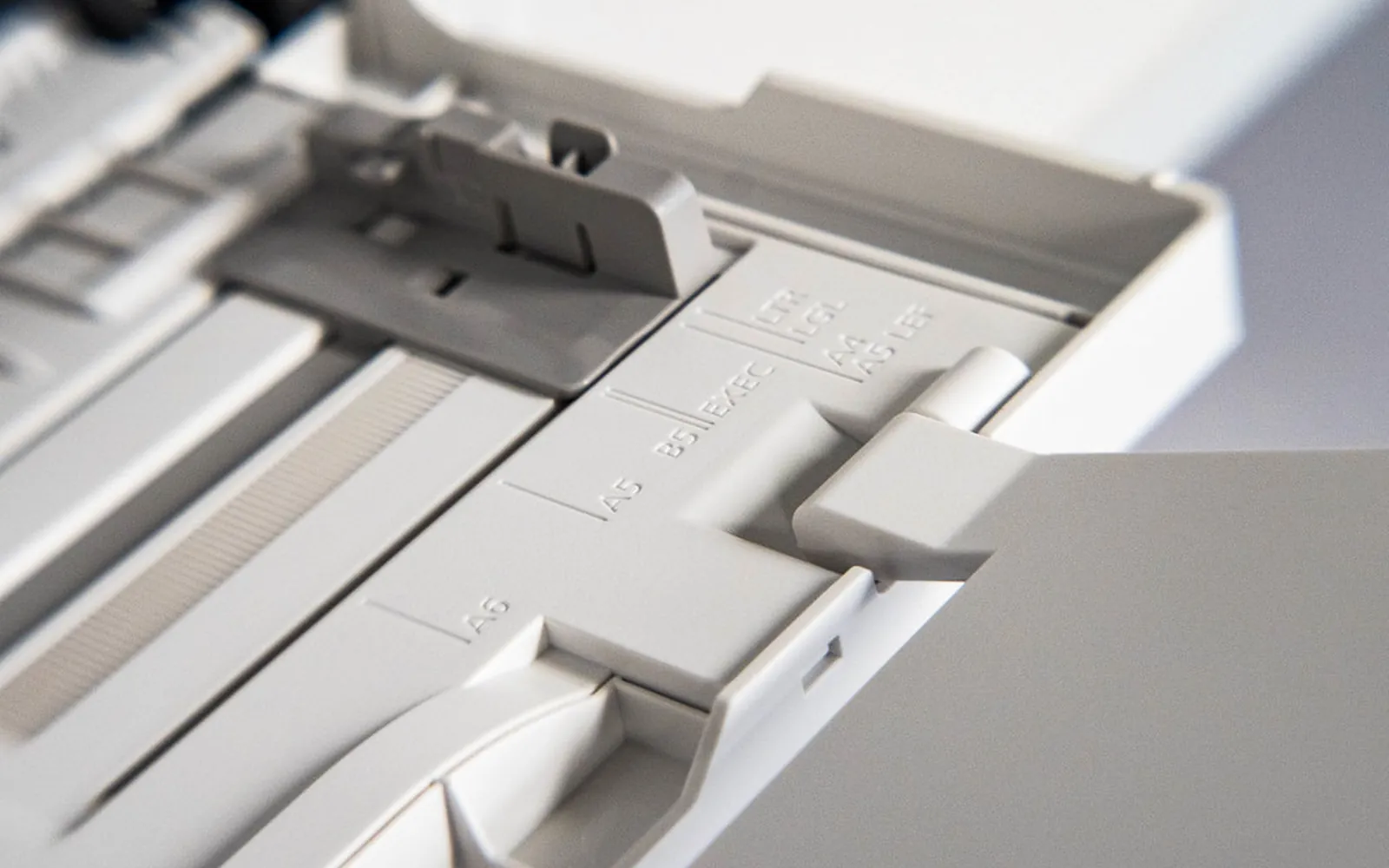
- Avoid paper that is heavier than your printer is rated for; the manual lists the supported weights for each tray.
3. Give the ink time to dry
Heavy graphics on plain paper and glossy photos can stay tacky for a while. Take each sheet out of the output tray as it comes out, or let photos dry flat before stacking them. When printing double-sided, some drivers offer a longer drying time option; turning it on prevents the second side from smearing the first. Wrong colours mixing into each other can also be a settings issue, covered in printer printing wrong colors.
4. Clean the rollers and the platen
Ink builds up inside the printer after borderless printing, a paper jam or a leaking cartridge, and is then transferred to the back or edges of every page.
- Look in the maintenance menu for a paper feed cleaning, roller cleaning or bottom plate cleaning function. Many printers have one that feeds plain sheets through to pick up loose ink.
- If marks remain, switch the printer off and unplug it. Wipe the platen and any reachable rollers gently with a lint-free cloth lightly dampened with water. Do not touch the print head, the white translucent encoder strip or any electronic parts.
- Let everything dry before switching on and printing a test page.
If a jammed sheet left pieces behind, remove them first using how to clear a paper jam.
5. Stop the head rubbing the paper
If the streaks run across the page in the head’s direction, the paper is scraping the print head. Use flat paper and check the driver or the control panel for an option such as thick paper, paper abrasion prevention or increased head height. Run a print head alignment afterwards so the head prints accurately at its new height.
6. Check the cartridges
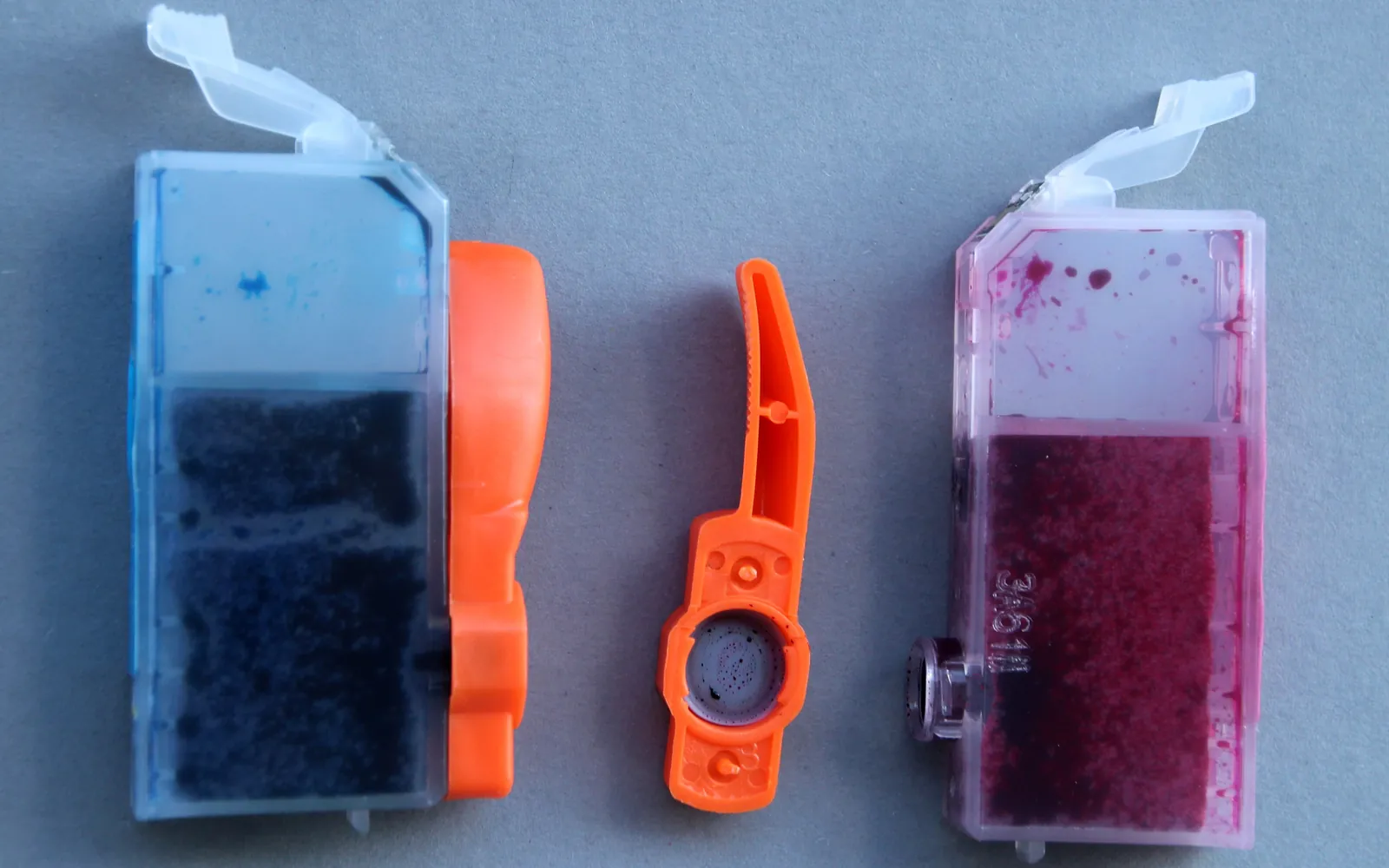
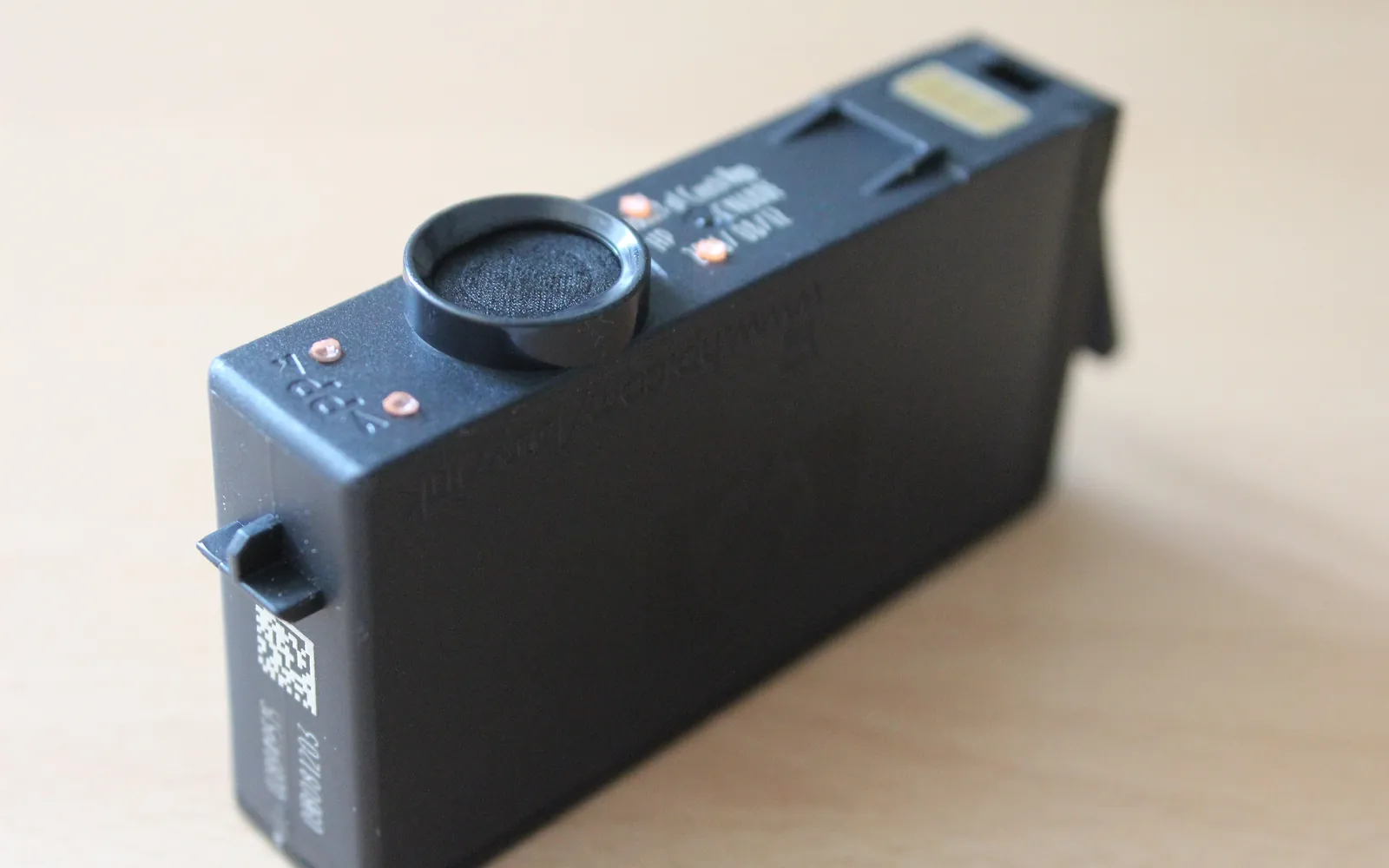
A cartridge that is cracked, overfilled or poorly refilled can leak and drip ink onto the page. Remove each cartridge and look for ink on the outside or pooling in the carriage. If one is leaking, replace it and clean the area with a damp cloth. If you have just replaced a cartridge and black ink is now missing rather than smearing, see printer not printing black.
Inkjet versus laser smudges
| What you see | Inkjet cause | Laser cause |
|---|---|---|
| Wet smear on the front | Too much ink, wrong paper or wrong side | Not applicable |
| Marks on the back | Ink on platen or rollers | Toner on transfer or fuser roller |
| Print wipes off when rubbed | Ink not dry yet | Toner not fused: paper setting or worn fuser |
| Repeating spot down the page | Dirty roller | Drum, roller or fuser defect |
| Dusty grey haze | Not typical | Leaking toner cartridge |
On laser printers, toner is a powder that is bonded to the paper by heat and pressure in the fuser. If it smudges, set the paper type correctly first, especially for heavy or glossy paper. If loose toner falls inside the printer, remove the cartridge, check it for cracks or a leaking seal, and clean spilled toner with a dry lint-free cloth; avoid an ordinary household vacuum cleaner for toner. Do not touch the fuser, which gets very hot.
When to replace a part, and when it is not worth it
- Ink cartridge: replace it if it leaks or the smears follow one colour after cleaning.
- Print head: if the head itself is dripping or the smears persist after every step above, the head may be damaged. On printers where the head is in the cartridge, a new cartridge fixes it; separate heads are often costly.
- Fuser (laser): replace it if toner still rubs off with the correct paper setting, or if pages come out creased. The manual usually explains whether it is a user-replaceable part.
- Internal ink absorber: some inkjets show a maintenance message when the pad that collects waste ink is full. That is a service job, and on an older printer the repair may cost more than the printer is worth.
Before ordering any part, compare its price with that of a new printer of similar quality. A low-cost printer that needs a head or a service repair is often better replaced.
Frequently asked questions
Why is my printer smudging ink on every page?
On inkjets, the most frequent causes are a paper type setting that puts down too much ink, paper that is damp or curled, and ink on the rollers or platen inside the printer. On laser printers, toner that rubs off usually means it is not being fused properly, either because of the paper setting or a worn fuser.
Why are there ink marks on the back of my printed pages?
Ink has collected on the platen or the output rollers, often after printing a borderless image or after a page jammed. Run the printer's paper feed or roller cleaning function if it has one, or wipe the platen and rollers gently with a damp lint-free cloth while the printer is off.
How long does inkjet ink take to dry?
It depends on the ink, the paper and the humidity. Plain paper usually dries quickly, while glossy photo paper and heavy coverage can stay tacky for a while. Let photos dry flat before stacking them, and remove each page from the output tray as it prints if they are sticking together.
Can the wrong side of photo paper cause smudging?
Yes. The coated side absorbs the ink; the back does not, so ink sits on the surface and smears. Check the paper packaging to see which side to print on and which way to load it in your printer.
Why does toner rub off my laser prints?
Toner is fixed to the paper by heat and pressure in the fuser. If the paper setting is too light for the paper you use, or the fuser is wearing out, the toner does not bond fully and wipes off. Set the correct paper type first; if the problem continues, the fuser may need replacing.
Sources
Editorial team
The Fix a Printer team writes and updates independent printer troubleshooting guides, checking Windows and macOS steps against Microsoft and Apple documentation.