Paper jams and feeding
Printer pulling multiple sheets: why it double feeds and how to stop it
Written by Fix a Printer Editorial Team · Updated
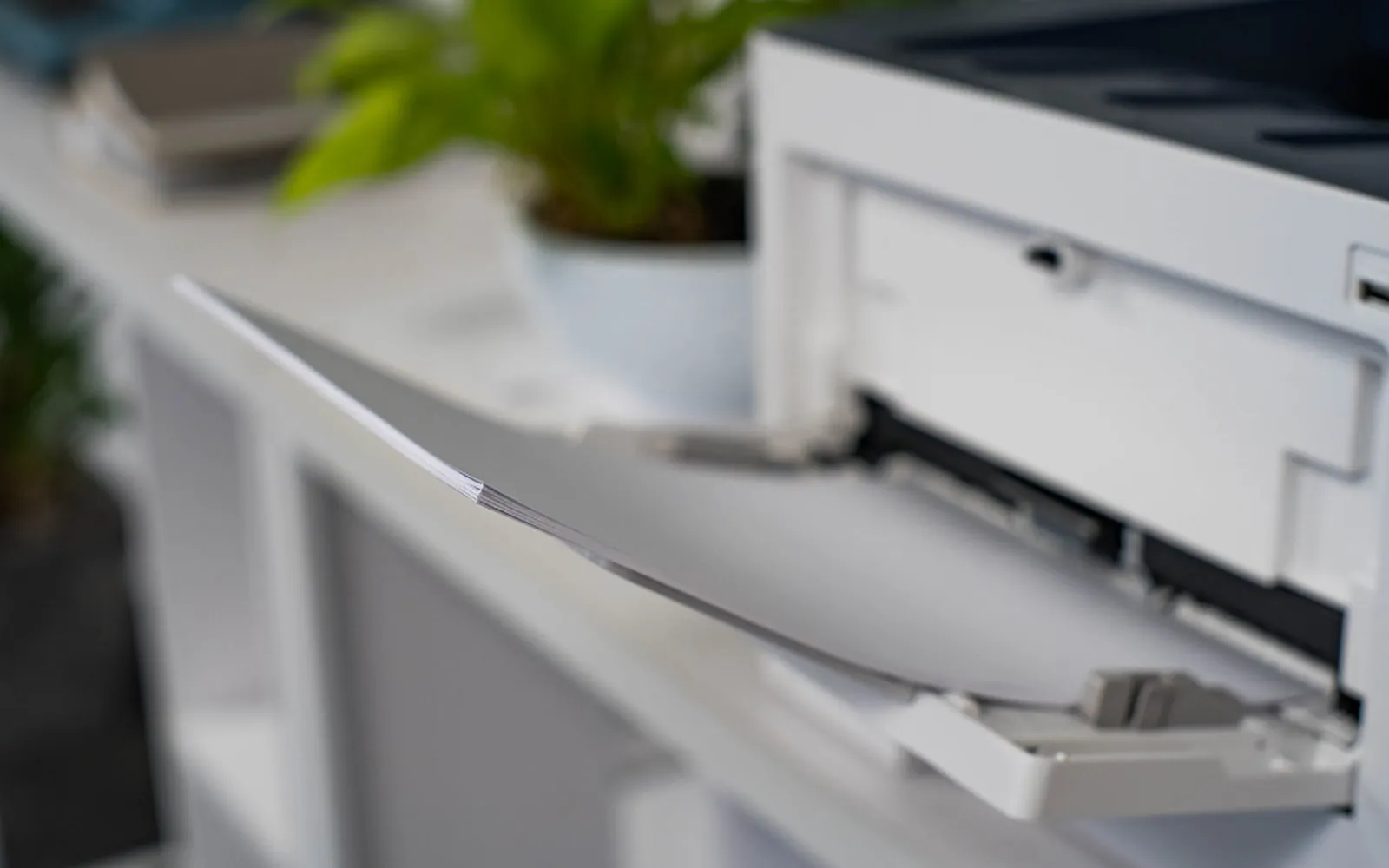
A printer pulling multiple sheets at once wastes paper, leaves blank pages in the middle of documents and often ends in a jam. The good news is that most double feeds are caused by the paper or the way it is loaded, not by a broken part. This guide starts with the free fixes and moves on to the separation pad and rollers only if the paper turns out not to be the problem.
If the printer pulls in no paper at all, see printer not picking up paper. If a double feed has already caused a jam, first follow how to clear a paper jam. The printer troubleshooting guide lists every other symptom.
If single sheets go through but come out crooked, see printer printing skewed.
How a printer picks up one sheet
Most printers feed paper with two parts working together. A rubber pickup roller presses on the top of the stack and turns to push the top sheet forward. Just in front of it sits a separation pad or separation roller, a high-friction surface that holds back any sheet underneath. As long as the top sheet slides easily over the next one and the pad still grips, only one sheet gets through.
Double feeds happen when sheets cling together more strongly than the pad can separate them, when too much pressure pushes several sheets forward, or when the pad has worn smooth.
Step 1: Take the paper out and check for leftovers
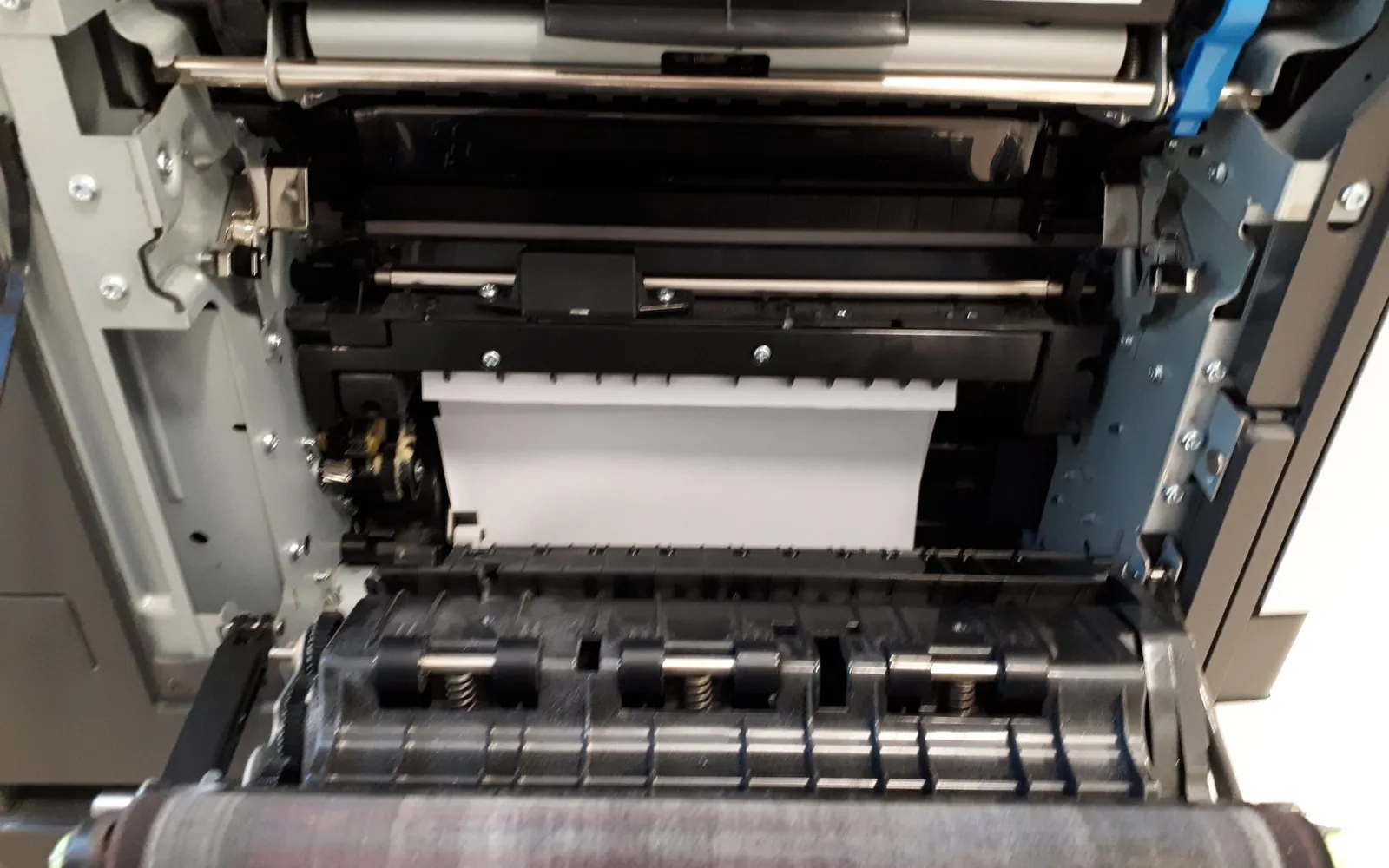
Remove the whole stack from the tray. Open the access covers the user guide describes and look for sheets stuck halfway, folded corners or torn pieces. An extra sheet left inside can trigger new double feeds or a false jam message; if the printer keeps reporting a jam you cannot see, read printer paper jam but no paper.
Step 2: Fan the paper and use a fresh ream
Sheets from the same ream often stick together, either from static electricity or because the edges were pressed together when the paper was cut. To separate them:
- Hold the stack at both ends and flex it gently into a curve and back.
- Fan the edges on all four sides.
- Tap the stack on a flat table until the edges are even again.
If the paper has been sitting in the tray for weeks, or the room is humid, it may have absorbed moisture and curled. Load sheets from a freshly opened ream and keep the rest sealed in its wrapper, stored flat.
Step 3: Load the tray the right way
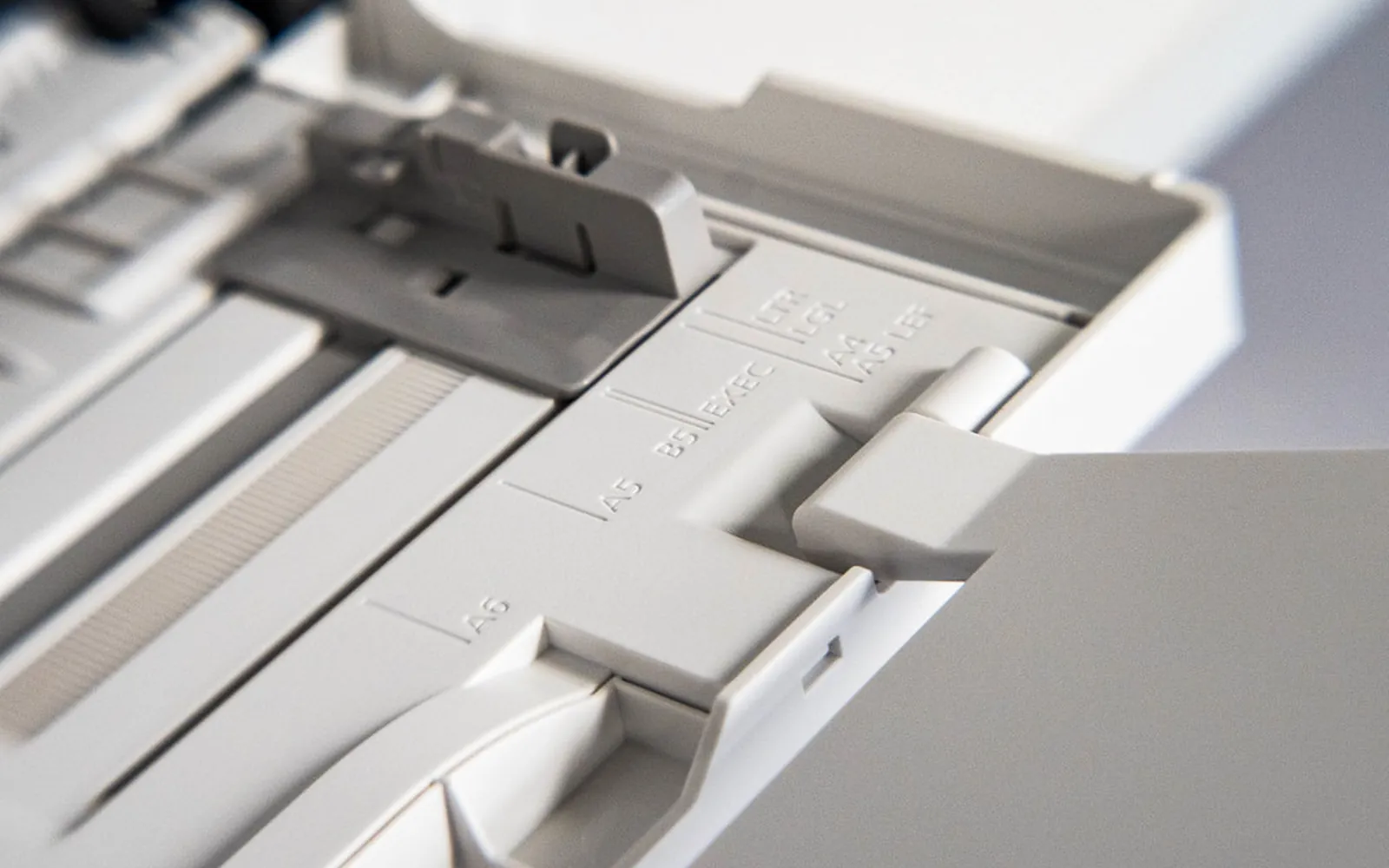
- Do not overfill. Keep the stack below the maximum fill mark on the tray. A tray that is too full pushes extra sheets against the pickup roller.
- Do not top up a partly used stack. Adding new sheets on top of old ones mixes paper with different curl and moisture. Take the old sheets out, add the new ones, then put the old sheets on top or use them separately.
- One kind of paper at a time. Mixing weights or finishes in one tray is a common cause of double feeds.
- Set the guides. Slide the side and rear guides until they touch the stack lightly without bending it.
Step 4: Check the paper type and the paper itself
Very thin paper, glossy or coated paper and paper with rough cut edges are all more likely to feed in pairs. Check that the paper is within the weight range listed in the user guide for that tray, and select the matching paper type in the print dialog or on the printer’s control panel. A mismatched setting will not usually cause a double feed on its own, but it can change how the printer handles the sheet.
For labels, envelopes, card or photo paper, use the tray or slot the user guide recommends; many printers have a rear or manual feed path for these.
Step 5: Clean the separation pad and pickup rollers
If double feeds continue with fresh paper loaded correctly, the feed parts are the next suspect. Paper dust and toner build up on the rubber and make it slippery.
- Switch the printer off and unplug it.
- Remove the tray and locate the pickup roller and the separation pad using the user guide for your model.
- Wipe them with a lint-free cloth lightly dampened with water. Do not use alcohol or solvents unless the manufacturer says they are safe for that part, because they can dry out the rubber.
- Let everything dry completely before plugging the printer back in.
Test with ten or twenty sheets of fresh paper.
Step 6: Replace worn feed parts
Rubber rollers and pads wear smooth over many thousands of pages. Signs of wear are a shiny, hard surface, visible cracks or flat spots, and double feeds that come back soon after cleaning. On many printers the separation pad, separation roller or a roller kit is a part owners can replace; the user guide or the manufacturer’s support pages list the part for your model and the steps. If the part is not user-replaceable, compare the repair cost with the value of the printer.
Symptoms that look like double feeds
- A blank page between printed pages can also be a blank page in the document or an extra page created by the app. Check the print preview. If blank pages come out on their own, see printer printing blank pages.
- Pages printed slanted or cut off after a double feed point to skewed feeding; printer cutting off edges explains how to straighten it.
- Paper going in but stopping with an out-of-paper message is a sensor or pickup problem rather than a double feed; see printer says out of paper.
Quick checklist
- Fresh, fanned paper of one type, below the fill mark.
- Guides touching the stack.
- Correct paper type selected.
- Clean pickup roller and separation pad.
- Worn pad or roller replaced if double feeds return quickly.
In most cases, the paper and the tray are the answer. When they are not, the cause is usually a worn pad or roller, which is one of the easier repairs on most printers.
Frequently asked questions
Why does my printer pull multiple sheets at once?
Usually the sheets are stuck together by static, humidity or cut edges, or the tray is overfilled so too many sheets press on the pickup roller. If the paper and tray are fine, the separation pad or roller that holds back the second sheet is dirty or worn.
Does fanning paper really help?
Yes. Fanning and flexing the stack separates sheets that cling together from static or from the cutting process at the paper mill. Square the stack again on a flat surface afterwards so the edges are even before loading.
Can humidity make a printer take two sheets?
Yes. Paper absorbs moisture from the air, and damp sheets tend to cling together and curl. Keep paper sealed in its wrapper, store it flat and avoid leaving a full tray in a damp room for long periods.
What is a separation pad?
It is a small friction pad or roller that sits against the pickup roller. The pickup roller pulls the top sheet forward while the pad holds back the sheets underneath. When the pad is worn smooth, more than one sheet gets through.
Is a printer that double feeds worth repairing?
Often yes. On many models the separation pad or roller is an inexpensive part the owner can replace by following the user guide. Check that the part is listed for your exact model before buying it.
Sources
Editorial team
The Fix a Printer team writes and updates independent printer troubleshooting guides, checking Windows and macOS steps against Microsoft and Apple documentation.