Print quality
Printer printing faded: why prints come out pale and how to fix it
Written by Fix a Printer Editorial Team · Updated
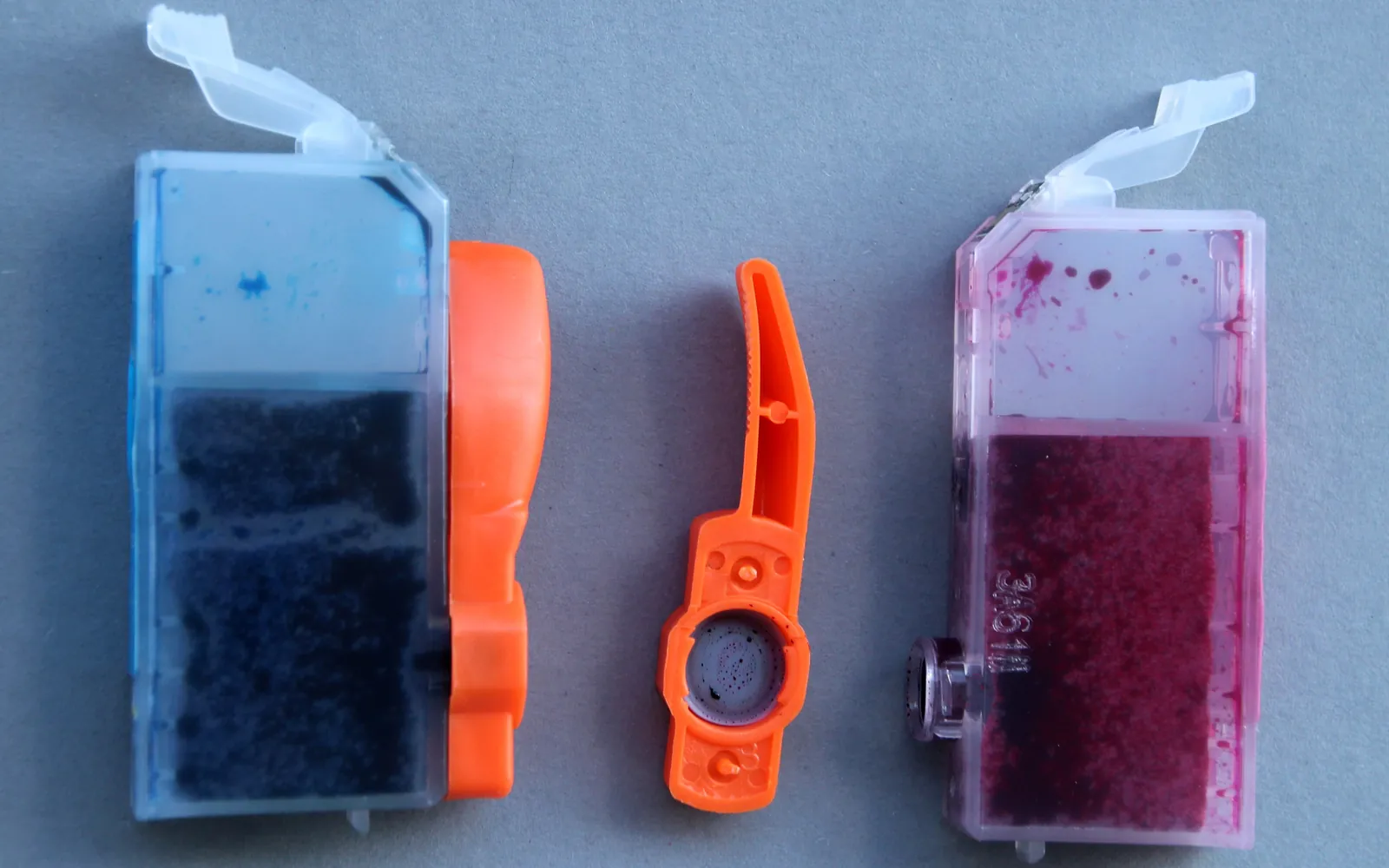
A printer printing faded pages is one of the most common print quality complaints, and the good news is that it is usually one of the cheapest to fix. Pale text, washed-out photos or greyish blacks can come from a setting, a low cartridge, a partly blocked print head or, on a laser printer, a tired drum. This guide helps you work out which one you have, starting with the fixes that cost nothing.
If your pages have distinct lines or stripes rather than an overall pale look, see printer printing lines or streaks. If they come out completely empty, go to printer printing blank pages. For every other symptom, the printer troubleshooting guide lists them all.
Identify the kind of fading
Look closely at a faded page before changing anything. The pattern points to the cause.
| What you see | Most likely cause | Where to start |
|---|---|---|
| Whole page evenly pale, all colours | Draft or economy mode, wrong paper type, low toner | Print settings |
| Only black text pale | Low or blocked black cartridge, or grey text in the document | Nozzle check, then the document |
| Colours dull or one colour weak | One colour low or partly blocked | Nozzle check for that colour |
| Faded band down one side (laser) | Toner unevenly spread or drum worn on one side | Rock the toner cartridge |
| Pale patches that rub off (laser) | Wrong paper type or a fuser problem | Paper type setting |
| Only one file prints pale | The file or the app | Try another document |
If colours are not just pale but plainly wrong, for example skin tones turning green, read printer printing wrong colors instead.
Step 1: Print a test page from the printer itself
Use the printer’s control panel or maintenance menu to print a nozzle check (inkjet) or a print quality, configuration or status page (laser). This page comes from the printer’s own memory, so your computer, driver and document play no part in it.
- Test page looks good, documents look pale: the problem is a setting, the driver or the file. Go to Step 2.
- Test page is also pale: the problem is in the printer, its supplies or the paper. Go to Step 3.
Step 2: Check the settings that make prints lighter
Print quality and economy modes
Many printers offer a Draft, Fast, Economy, EconoMode or Toner save option that deliberately uses less ink or toner. It is easy to switch on once and forget.
- Windows 11: open Settings > Bluetooth & devices > Printers & scanners, select the printer and choose Printing preferences. Set the quality to Standard, Normal or Best and turn off any economy or toner save option. Some printers keep the toner save setting in the printer’s own menu or its built-in web page instead, so check there too.
- macOS: in the app’s print dialog, look for the quality or media section (its name depends on the app and the printer driver) and choose normal or best quality. To make it the default, save the settings as a preset.
Paper type
The paper type tells an inkjet how much ink to put down and tells a laser printer how much heat to use. Plain paper selected for glossy photo paper, or photo paper selected for plain paper, can produce dull or patchy results. Match the setting to the paper in the tray.
The document itself
If only one file prints pale, open it and check the text colour. Text set to a dark grey, a transparency effect in a presentation or a low-resolution scanned image will all look faded on paper. A scanned page that already looks grey on screen will print grey. Try printing a different document; if that prints normally, the printer is fine.
Step 3: Inkjet printers
Check ink levels and cartridge fit
Check the levels on the printer’s screen or in the printer software. A cartridge can print faintly for a while before the printer reports it as empty. If you have just installed a new cartridge, take it out and make sure every bit of protective tape and any plastic clip is removed, then press it in until it clicks. A cartridge that is not fully seated may not make good contact; if the printer reports a problem reading it, see printer cartridge not recognized.
Run a nozzle check and head cleaning
Pale output on an inkjet very often means some nozzles in the print head are partly blocked by dried ink. This is common after a printer has sat unused for weeks.
- Print a nozzle check and look for gaps or faint areas in each colour block.
- Run one Head cleaning cycle from the maintenance menu.
- Print another nozzle check and compare.
- Repeat up to three times if each cycle improves the pattern.
- If nothing changes, stop. Leave the printer switched on for several hours so ink can soak into the dried area, then try one more cycle.
Avoid running many cleaning cycles in a row; each one uses ink and fills the printer’s waste ink pad. If only black is affected and cleaning does not restore it, see printer not printing black.
Refilled and compatible cartridges
Refilled and third-party cartridges can work well, but quality varies between suppliers. If fading started right after switching cartridges and a nozzle check shows weak colour despite full levels, try a cartridge from a different source to rule the cartridge out.
Step 4: Laser printers
Low or unevenly spread toner
When toner runs low, it stops covering the page evenly. Remove the toner cartridge and rock it gently side to side five or six times to redistribute the powder, then reinstall it. If the print improves for a few pages and then fades again, the cartridge is nearly empty.
Print density and toner save
Laser printers often have a density or darkness setting in the printer menu or its built-in web page, separate from toner save. If someone lowered it, every page prints lighter. Set it back to the default and print a test page.
The drum
The drum (or imaging unit) transfers toner to the paper and wears out over time. On many printers it is built into the toner cartridge, so a new cartridge also renews the drum. On others it is a separate part with its own life counter; the printer’s status or supplies report usually shows it. A worn drum tends to give grey, uneven or faded prints even with fresh toner.
Damp paper and the environment
Paper that has absorbed moisture does not take toner as well and can print pale or blotchy. Use paper from a freshly opened ream and store it flat in its wrapper. If marks also appear on the page, laser printer ghosting and printer smudging ink cover those symptoms.
When to replace a part, and when it is not worth it
- Cartridge: replace it when levels are low or a nozzle check stays weak for one colour after cleaning on printers where the head is part of the cartridge.
- Inkjet print head (separate from the cartridges): consider it only after cleaning and resting fail. The head can be a significant share of the printer’s value, so compare the part’s price with a new printer before ordering.
- Laser drum or imaging unit: replace it when the status report shows it at the end of its life, or when new toner does not fix grey, faded pages.
- Laser printer with a fading problem plus jams or smearing: several worn parts at once (drum, fuser, rollers) can add up. Price them together before deciding.
Most faded prints are back to normal after Step 2 or a single cartridge change. If yours still fade after a fresh cartridge, cleaning and a correct paper setting, the print head or drum is the likely culprit, and the printer manufacturer’s support pages for your model will list the exact part and its replacement procedure.
Frequently asked questions
Why is my printer printing faded when the cartridge is new?
Check that all protective tape and clips were removed from the new cartridge, that it clicks fully into place and that draft or economy mode is off. On an inkjet, run a nozzle check: a new cartridge cannot clear a print head that has dried up, so one or two cleaning cycles may be needed.
Why are my laser prints getting lighter over time?
Gradual fading on a laser printer is normally toner running low or a drum nearing the end of its life. Remove the toner cartridge, rock it gently side to side and reinstall it. If prints stay pale, check the drum status in the printer's supplies or status report.
Does the paper type setting affect how dark the print is?
Yes. The paper type tells the printer how much ink to lay down or how much heat to use when fusing toner. A mismatch between the setting and the paper in the tray can produce pale, washed-out or patchy prints.
Why does only black text print faded?
Either the black cartridge is low or its nozzles are blocked, or the document text is set to a dark grey rather than true black. Print a nozzle check or test page; if black prints solid there, check the font colour in the document.
Is it worth fixing a printer that prints faded?
Usually yes, because most faded prints are fixed by a setting, a cleaning cycle or a new cartridge. It becomes less worthwhile when an inkjet print head that is separate from the cartridges needs replacing, so compare that part with the cost of a new printer.
Sources
Editorial team
The Fix a Printer team writes and updates independent printer troubleshooting guides, checking Windows and macOS steps against Microsoft and Apple documentation.